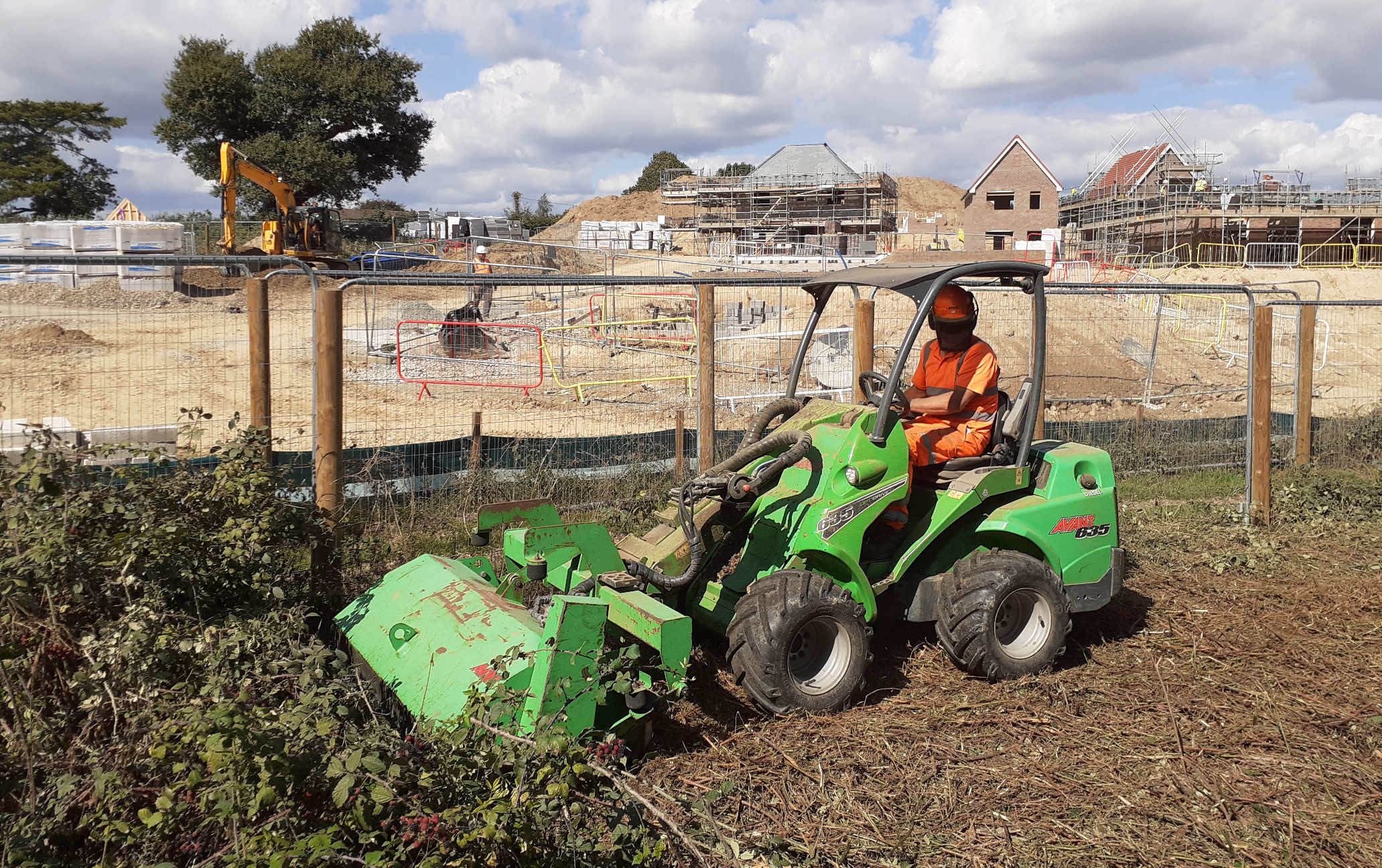
JAPANESE
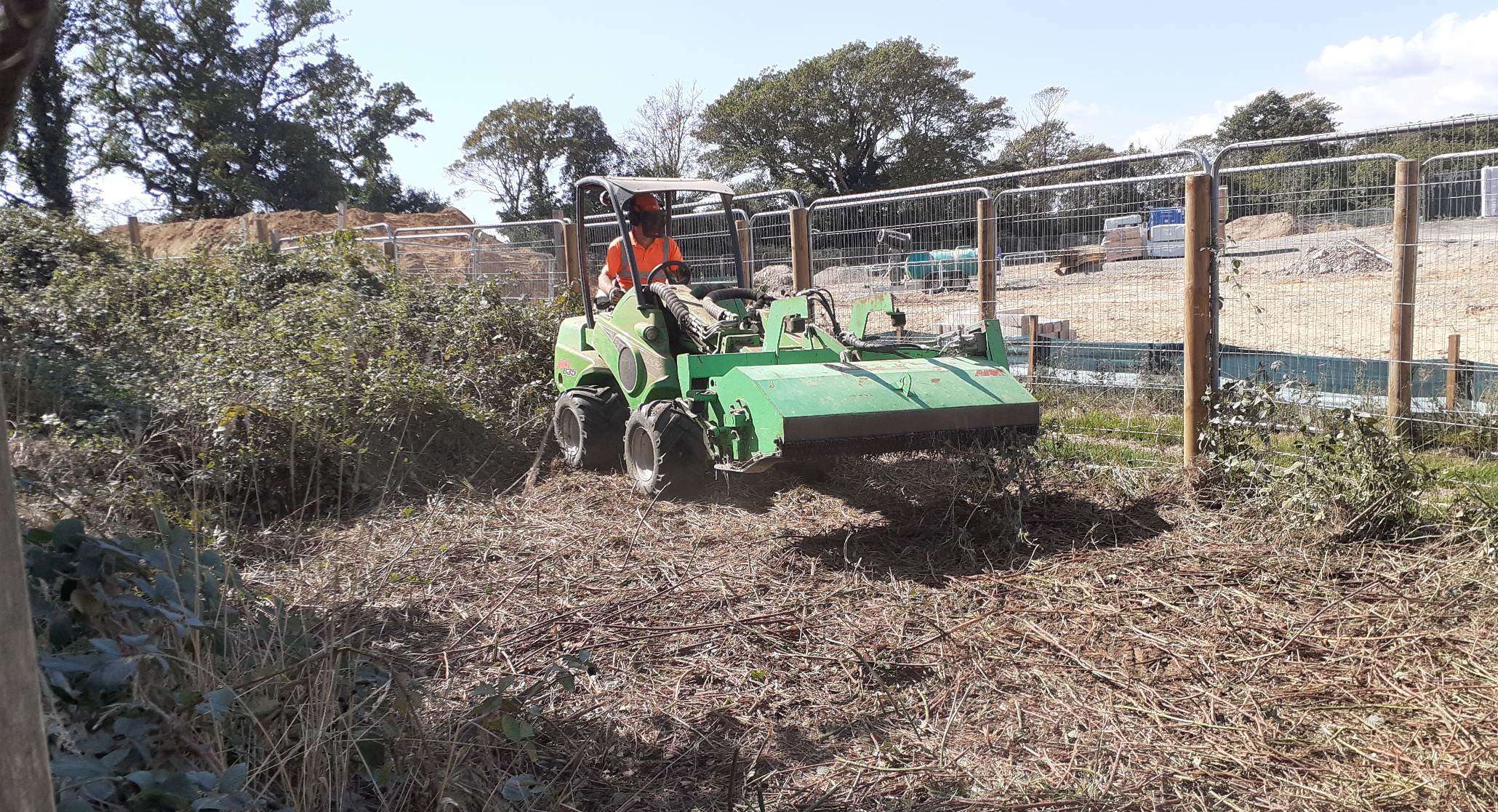
KNOTWEED - Is
removing this hedgerow illegal? In the background are houses
held to be a blot on the landscape, built by Charles Church and
Persimmon in July and August of 2026. It is alleged that developers
removed this hedgerow, adjacent to a section of adjacent land, that
contained Japanese Knotweed. Copyright picture © Injustice
(Countryside) Alliance.
In UK planning and environmental law, the inclusion of Japanese Knotweed (JK) eradication within a Section 106 Agreement (or enforced via specific planning conditions tied to s106 obligations) serves several legal, practical, and environmental functions.
We
are following a real case example, a public interest matter, that may
serve as a valuable authority, should the matter proceed to Wealden
District Council, the Local Government Ombudsman, or Parliamentary
Ombudsman. The following is a theoretical discourse, rather than an
allegation, though Wealden have previously denied the history attaching
to the electricity Museum, and the Parish Council were involved in
enforcement issues in 1986, and 2024. Thus the possibility of conspiracy
to pervert the course of justice, and to cause monetary (fraud)
loss, has been alleged.
Key Reasons Japanese Knotweed Eradication is Bound to Planning Obligations
Statutory Wildlife and Environmental Compliance: Under Section 14(2) of the
Wildlife and Countryside Act
1981, it is an offense to plant or otherwise cause
Japanese Knotweed to grow in the wild. Local Planning Authorities (LPAs) have a legal duty to ensure development proposals do not cause the spread of controlled or invasive species into surrounding habitats or adjacent properties.
Mitigation of Off-Site Nuisance & Encroachment: Under common law precedent (Williams v Network Rail Infrastructure Ltd [2018]), land owners and developers can be held liable in private nuisance if Japanese Knotweed spreads or encroaches onto neighbouring land, or if its presence on their site causes a measurable diminution in the value or enjoyment of adjoining property.
Site Viability & Structural Integrity: Knotweed rhizomes can penetrate asphalt, concrete footings, and drainage infrastructure. LPAs include site clearance conditions (such as Condition 17 for JK surveys and eradication protocols) to ensure new buildings and highways remain structurally sound and mortgageable.
Mitigation of Development Impact via Section 106: Section 106 agreements are legally binding deeds between developers and LPAs to make a development acceptable in planning terms. When invasive species are present, the s106 framework or accompanying planning conditions legally obligate the developer to execute an approved Management and Eradication Plan prior to commencement or occupation.
Why Developers Demand Off-Site Action ("HXLM") from Neighboring Landowners
When a developer is required by a s106 agreement or planning condition to eradicate Knotweed on their boundary, they face a severe technical challenge: rhizome re-infestation.
┌─────────────────────────┐ ┌─────────────────────────┐ ┌─────────────────────────┐
│ North Site │
│ Unregistered Land │
│ South Site │
│ (Developer Boundary) │ ◄──
│ (JK Source/Buffer) │ ◄──
│ (Original Clearance) │
│ │
│ │
│ │
│ s106 Obligation to │
│ Untreated Rhizomes │
│ Historically Cleared │
│ Eradicate On-Site JK │
│ Risk Re-Contamination │
│ c. 2000 │
└─────────────────────────┘ └─────────────────────────┘ └─────────────────────────┘
1. Re-Contamination Risk: Herbicide or excavation treatments on the developer’s side will fail if rhizomes from untreated, adjacent unregistered land continue to creep across the boundary.
2. Attempting to Shift Legal Duty or Remediation Costs: Developers often issue formal warnings or demands ("HXLM" / Hazard notifications) to adjacent presumed owners to force treatment on adjoining plots, or to establish a paper trail attempting to pass the cost of root-barrier installation or cross-boundary remediation onto the neighbor.
3. Lack of Legal Right of Entry: A developer cannot lawfully enter unregistered or third-party land to spray or dig up Knotweed without explicit permission or legal authority; doing so would constitute trespass and potentially illegal tipping under waste regulations (Environmental Protection Act 1990).
When a developer like
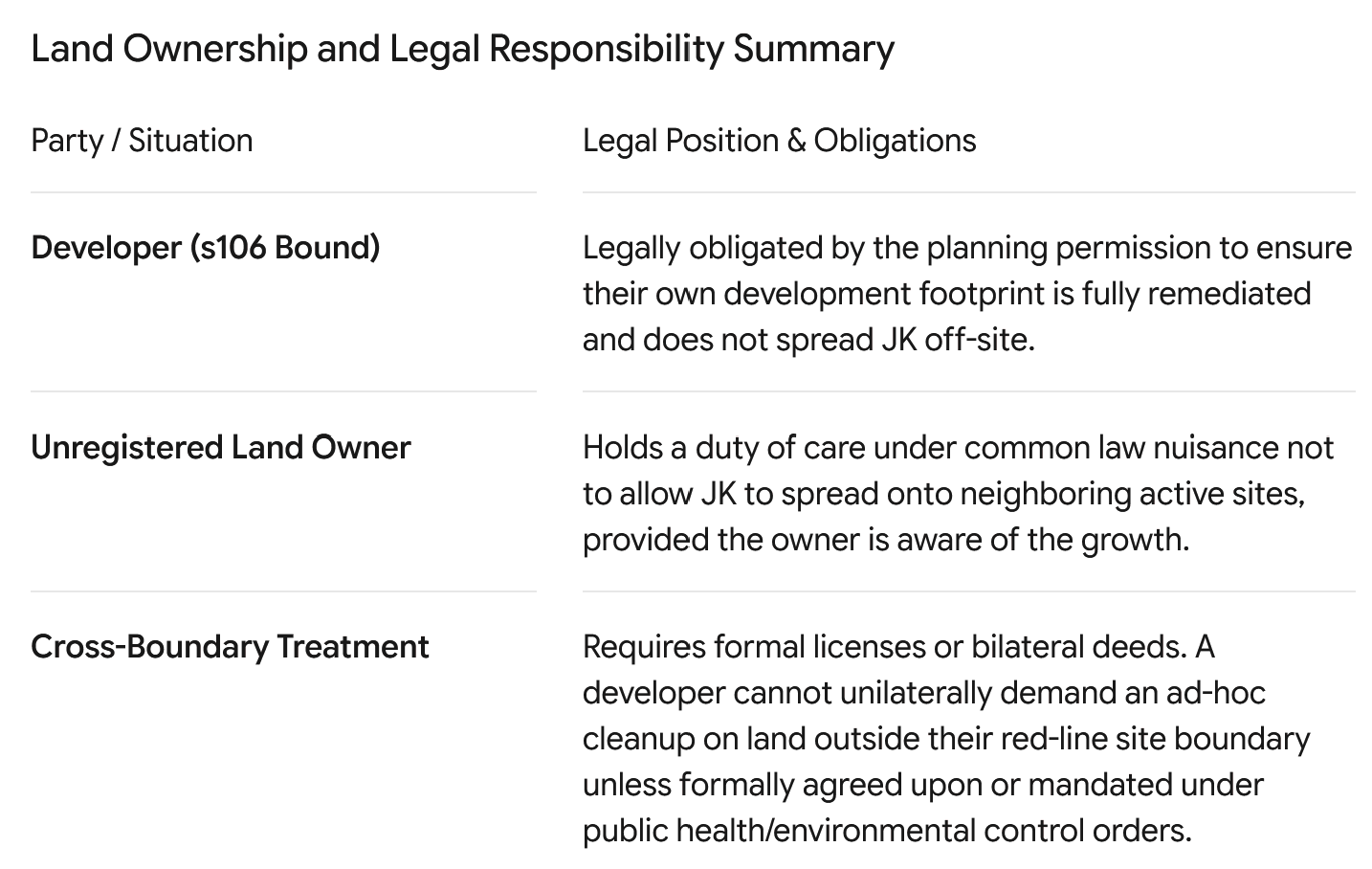
Persimmon (PLC) claims to own land containing Japanese Knotweed (JK) while simultaneously ignoring the Section 106 agreement or planning conditions requiring its eradication, they create a legal contradiction.
1. Does a Breach Invalidate the Planning Consent?
Failing to comply with a planning condition or s106 obligation does not automatically make a planning permission void or invalid on its own.
a) Breach of Control: Under the Town and Country Planning Act 1990, failure to comply with a s106 agreement or a pre-commencement/pre-occupation condition is classified as a breach of planning control.
b) Effect on Development: The planning consent remains in existence on the public register, but any development built in breach of conditions or obligations is technically unlawful until the breach is resolved or enforcement time limits expire.
c) Grampian Conditions: If the JK eradication was set as a "Grampian condition" (a condition stating that no development/occupation shall take place until JK is eradicated), building and selling houses without fulfilling that condition means the development was undertaken without lawful compliance.
2. What Powers Does the Local Authority (Wealden District Council) Have?
Section 106 obligations and planning conditions are directly enforceable by the Local Planning Authority (LPA). Under UK planning law,
Wealden District Council has specific enforcement mechanisms:
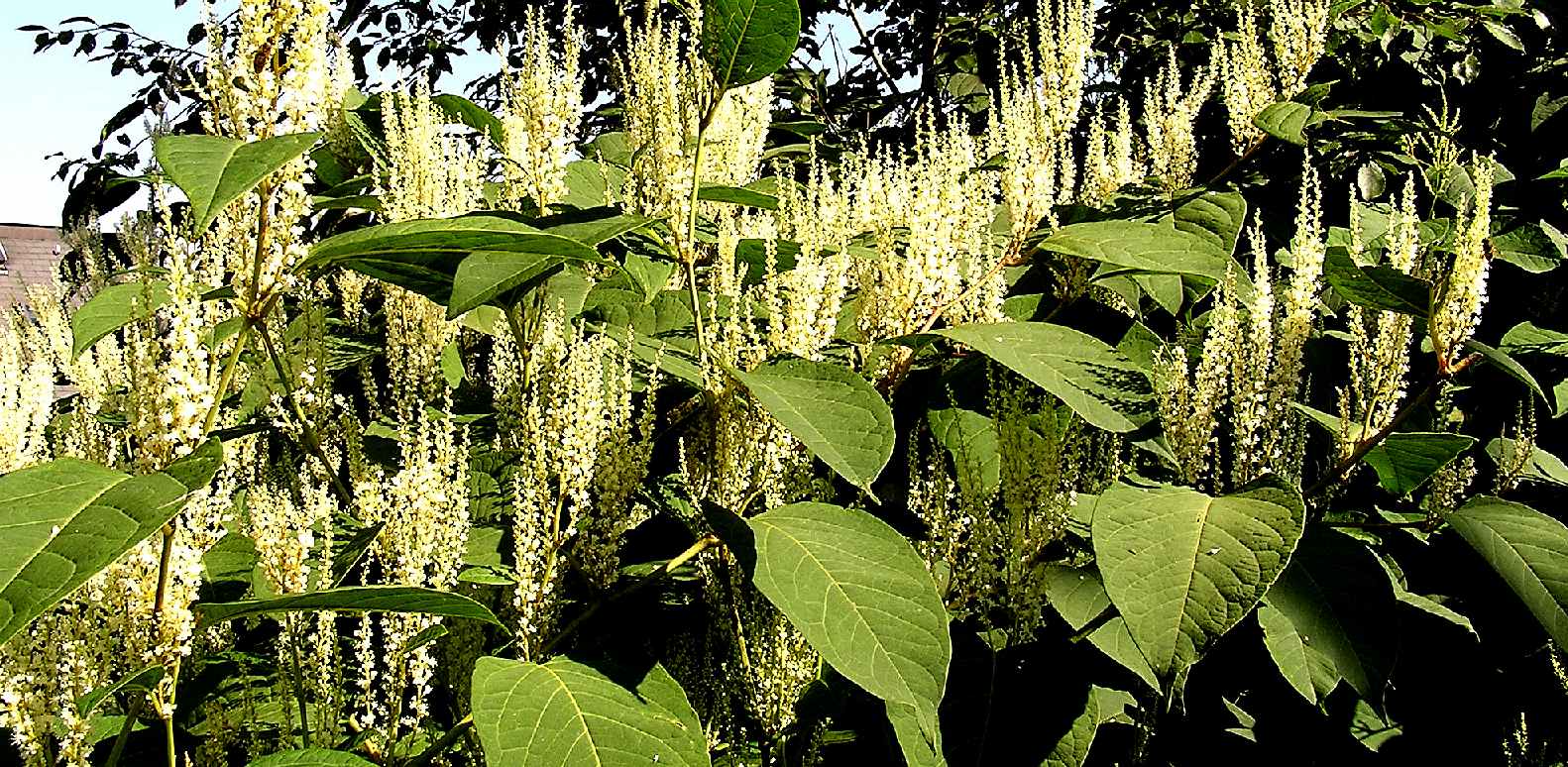
3. The "Council / Developer Partnership" Dynamic
If Wealden District Council is seen as working closely with PLC, residents or affected landowners often express concern about perceived conflicts of interest or reluctance to enforce. However, LPAs are bound by statutory duties:
1) Public Law Duties: LPAs cannot arbitrarily grant immunity or ignore s106 breaches to benefit a commercial partner. Doing so exposes the Council to Judicial Review in the High Court for failure to perform statutory duties or for unlawful fettering of discretion.
2) Local Government Ombudsman (LGO): If an LPA refuses to investigate a clear, recorded breach of a planning condition/s106 obligation (especially one involving an invasive species affecting neighboring land), a complaint of maladministration can be lodged with the LGO.
3) Formal Breach Complaints: Any member of the public can submit a formal Planning Enforcement Complaint citing the planning application reference, the specific condition/s106 clause regarding Japanese Knotweed, and photos proving non-compliance. Once formally logged, the LPA must record their decision on whether it is "expedient" to enforce.
4. Developer's Contradictory Position & The Risk to Homeowners
The developer's legal argument may place them in a self-created trap:
┌───────────────────────────┐
PLC Claims Ownership
└─────────────┬─────────────┘
│
┌────────────────────────┴────────────────────────┐
▼
▼
If PLC DOES Own the Land:
If PLC DOES NOT Own the Land:
───────────────────────────────────────
───────────────────────────────────────
|
• They are in direct breach of the s106
obligation / planning condition.
• Liable for LPA enforcement action.
• Liable in private nuisance to neighbors. |
•
They have no legal title to the land.
•
HXML’s 12-year adverse possession claim over the
unregistered sliver
remains unchallenged. |
Furthermore, if
a developer has built and sold homes while failing to treat a known, adjacent infestation on land they claim to own, they face significant commercial exposure:
- Conveyancing & Search Enquiries: PLC’s buyers' solicitors will have asked standard TA6 forms regarding Japanese Knotweed. If PLC claimed ownership of the plot but suppressed or ignored the JK presence, they risk misrepresentation claims from the new homeowners.
- Mortgage Liability: Mortgage lenders require clear 5-to-10-year Insurance Backed Guarantees (IBGs) for JK remediation within 7–13 meters of a property boundary before lending.
When a developer like Persimmon (PLC) claims to own land containing Japanese Knotweed (JK) while simultaneously ignoring the Section 106 agreement or planning conditions requiring its eradication, does this create a legal contradiction.
1. Does a Breach Invalidate the Planning Consent?
Failing to comply with a planning condition or s106 obligation does not automatically make a planning permission void or invalid on its own.
a) Breach of Control: Under the Town and Country Planning Act 1990, failure to comply with a s106 agreement or a pre-commencement/pre-occupation condition is classified as a breach of planning control.
b) Effect on Development: The planning consent remains in existence on the public register, but any development built in breach of conditions or obligations is technically unlawful until the breach is resolved or enforcement time limits expire.
c) Grampian Conditions: If the JK eradication was set as a "Grampian condition" (a condition stating that no development/occupation shall take place until JK is eradicated), building and selling houses without fulfilling that condition means the development was undertaken without lawful compliance.
2. What Powers Does the Local Authority (Wealden District Council) Have?
Section 106 obligations and planning conditions are directly enforceable by the Local Planning Authority (LPA). Under UK planning law, Wealden District Council has specific enforcement mechanisms:
POTENTIAL CONFLICT OF INTERESTS
In the context of planning permission WD/2015/0090/MAO, Condition 17 and the underlying legal obligations create a clear situation regarding Persimmon (PLC), Latimer Homes (LH), and Wealden District Council.
1. Does Res Judicata Apply to Planning Condition 17?
While res judicata strictly applies to court judgments, an equivalent public law doctrine applies to formal administrative decisions (such as granted planning
permissions):
Binding Nature of Condition 17: When Wealden District Council issued consent WD/2015/0090/MAO, Condition 17 established a formal legal finding of fact: Japanese Knotweed (JK) was explicitly present within both the site
[??] and its vicinity. Complete survey, control, and eradication from the site and vicinity was made a pre-commencement condition.
Persimmon is Bound as Successor in Title: Under Section 75 of the Town and Country Planning Act 1990, planning permissions (and their conditions) run with the land. Persimmon cannot now claim ignorance of the presence of JK or dispute its location to suit a boundary claim. The existence of Condition 17 legally estops the developer from asserting that JK was never on or adjacent to their development boundary.
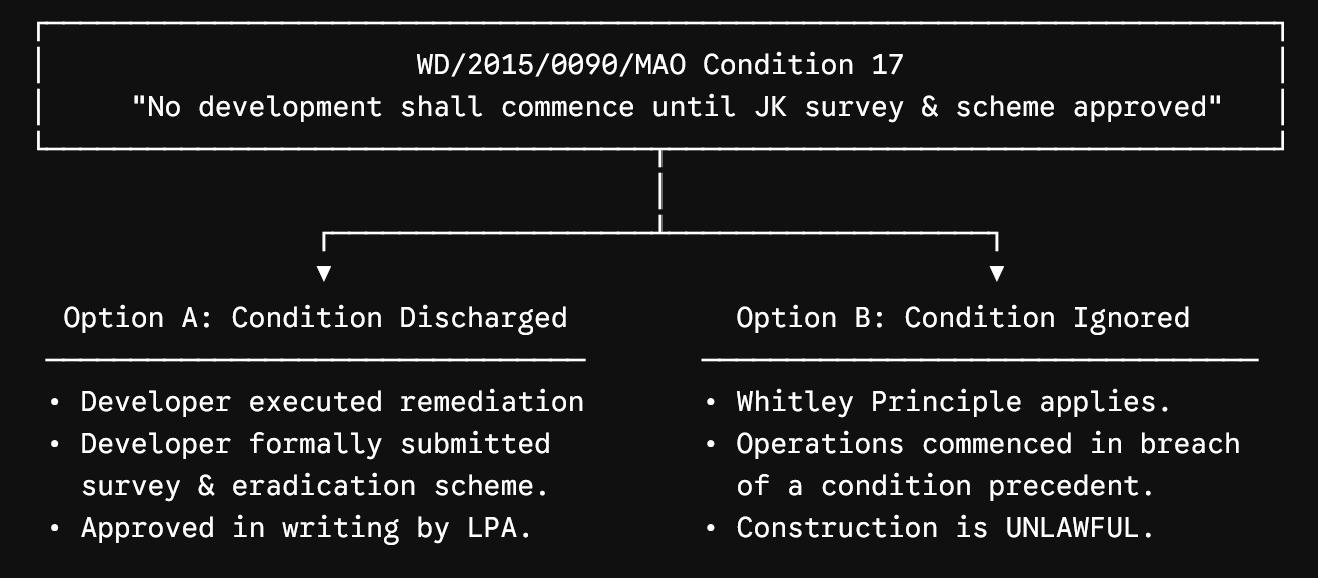
2. The Whitley Principle: Unlawful Commencement
Condition 17 is framed explicitly as a true pre-commencement condition:
"No development shall commence until a detailed up-to-date survey... shall be carried out. A resulting scheme... shall be submitted to and approved in writing... Thereafter the development shall be carried out in accordance with that scheme."
Under UK planning case law (FG Whitley & Sons v Secretary of State for Wales [1992]), if a developer commences construction without formally discharging a negative pre-commencement condition (a condition stating "No development shall commence until..."), the entire development goes ahead without planning permission and is technically unlawful.
3. The Dilemma Facing Persimmon (PLC)
By demanding sight of correspondence from 2014-2016 (Latimer
Developments Limited) and simultaneously asserting ownership over the unregistered sliver where the JK was situated, Persimmon faces two legal consequences:
If Persimmon Claims Ownership of the Unregistered Sliver:
They admit the JK was on their land.
If they (or Latimer) never submitted an approved scheme to eradicate it from that sliver prior to commencing construction, they breached Condition 17. The commencement of the build was unlawful under the Whitley rule.
If Persimmon Disclaims Ownership of the Unregistered Sliver:
They have no standing or legal right to threaten any occupier over treatment, fencing, or possession of that land.
Save for the ordinary duty of care one person owes to another.
The continuous possession, clearance, and remediation since before 2015 remains uninterrupted, strengthening
the occupier's adverse possession claim (12-year rule under the Limitation Act
1980).
4. Public Law Consequences & Local Authority Enforcement
If Wealden District Council (WDC) fails or refuses to enforce Condition 17 despite houses being built,
perhaps due to a conflict of interest, or other conspiracy, their inaction is subject to legal challenge:
Breach of Duty: LPAs have a statutory enforcement discretion, but they cannot ignore a clear breach of a pre-commencement condition that was imposed specifically for statutory wildlife and structural safety reasons. A failure to investigate a recorded breach of Condition 17 opens the decision to Judicial Review in the High
Court, or investigation by the Local Government Ombudsman.
Impact on Homebuyers: Houses built on a site where pre-commencement conditions were never lawfully discharged carry defective title. Conveyancing searches for prospective buyers will flag un-discharged conditions, potentially preventing buyers from securing mortgages or reselling properties on the development.
WD/2015/0090/MAO
- CONDITION
17 - JAPANESE KNOTWEED
17. No
development shall commence until a detailed up-to-date survey of the
presence of Japanese Knotweed
within both the site and its vicinity shall be carried out. A resulting
scheme for the control of Japanese Knotweed on site, and its eradication
from the site, shall be submitted to and approved in writing by the Local
Planning Authority. Thereafter the development shall be carried out
in accordance with that scheme.
REASON: Under the Wildlife
and Countryside Act 1981 (as amended) it is an
offence to plant Japanese knotweed or otherwise cause it to grow in the
wild. This species has been identified on site and is ecologically and
structurally damaging. It must be controlled to prevent its spread both
during and after construction, and eradicated from the site (with
appropriate disposal as necessary) having regard to Policy EN8 of the
adopted Wealden Local
Plan. With regard to Regulation 35 of the Development Management
Procedure Order 2015, it is essential to ensure the eradication of this
invasive species from the site prior to construction works, therefore
the condition adopts the pre-commencement format to protect the
environment.

LATIMER,
THAKEHAM, CLARION (GROUP) - LIST OF PERSONS INVOLVED IN THE DEVELOPMENT
Peter
Rawlinson - Gleeson Strategic Land
Ben
Rainbow - Arboricultural & Biodiversity Officer
Steve
Tuhey - Managing Director, Thakeham Client
Richard
White, Director of Land and Planning at Latimer & Clarion Housing
Group
LATIMER
DEVELOPMENTS - Previously: William Sutton Developments Limited
Christopher
John Hatfield
Ruth
Margaret Cooke
David
Simon Fordham
Austen
Barry Reid
Rupert
Owen Sebag-Montefiore
Mark
Christopher Rogers
David
Anthony Lewis
Michelle
Reynolds
Southern
Water - Nick Claxton Team Manager – Flood Risk Management & Revai
Kinsella, Principal Drainage Officer
WD/2015/0090/ HERSTMONCEUX
VILLAGE CONDITIONS A - Z INDEX
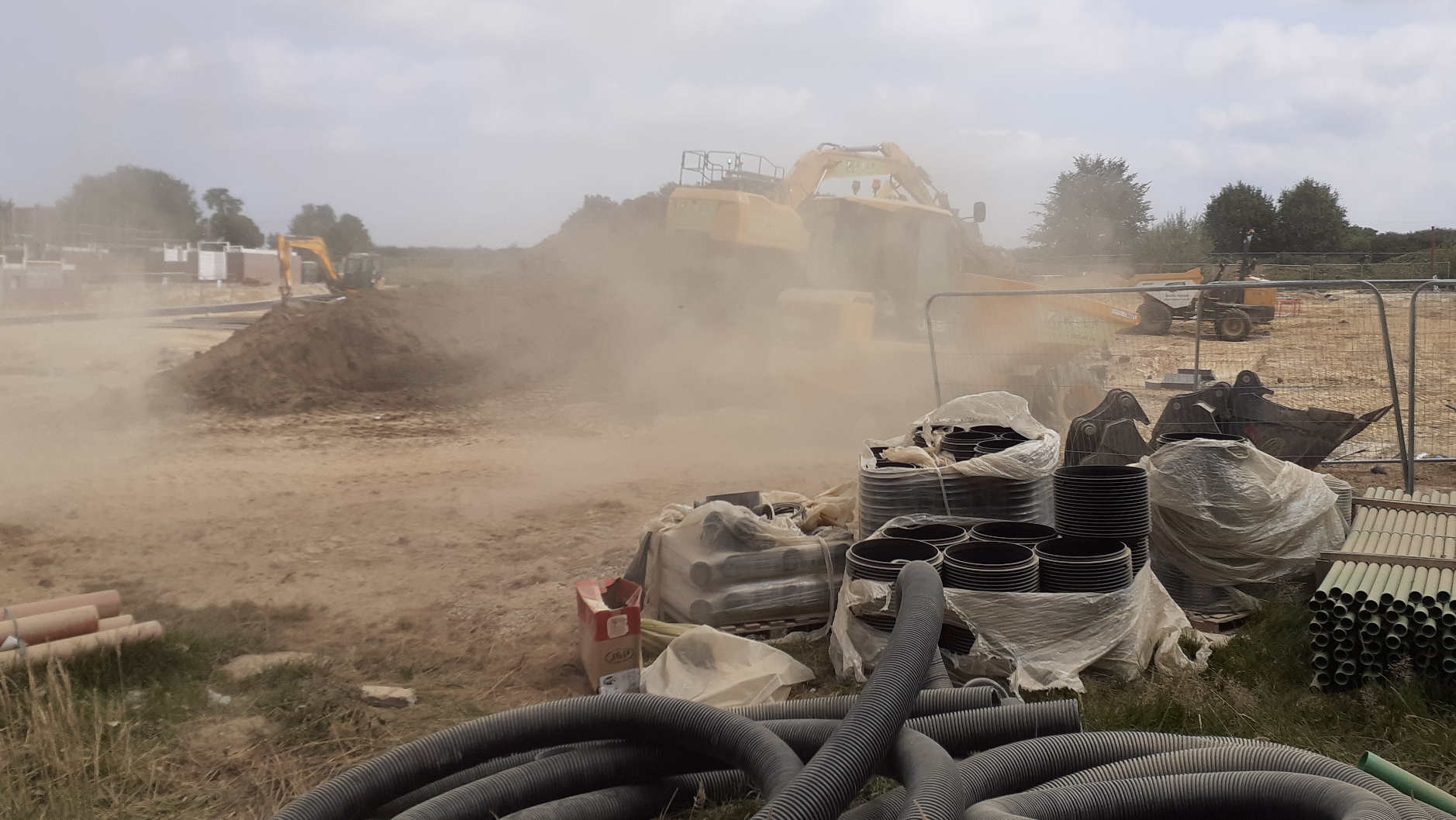
Dusty
or what. 18 July 2026, clouds of dust contaminate Chapel Green,
Herstmonceux.
It's
more than just a nuisance. Copyright photograph © Injustice Alliance
(Countryside).
...
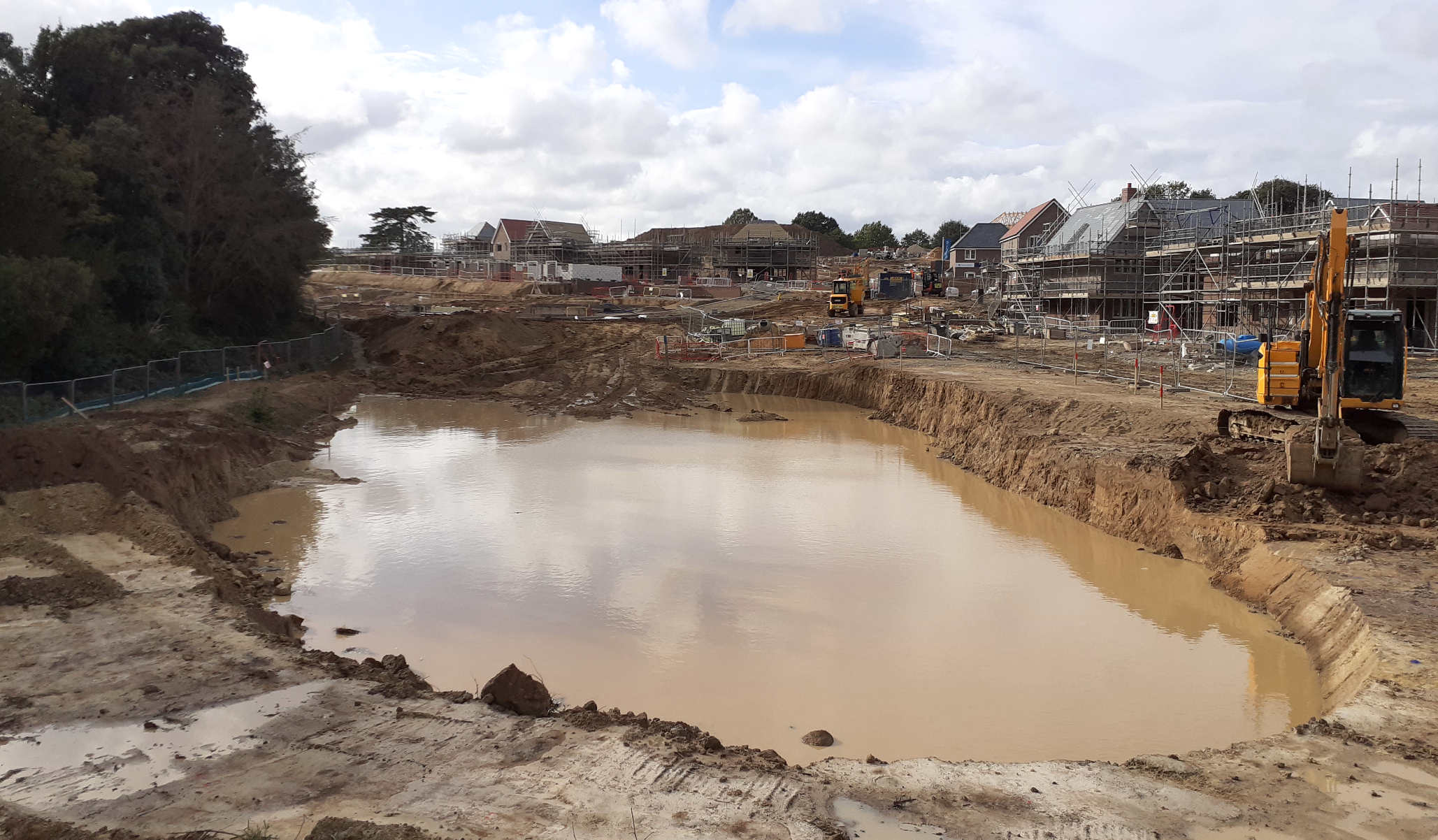
CHAPEL GREEN -
Flash flooding is a feature that is set to worsen, as El Nino causes
moisture to be released after long hot dry summers. This is a man-made
pond or basin, ahead of two naturally occurring ponds, that feed onto a
Ramsar site, at the Pevensey Levels. Two other water basins are supposed
to be installed upstream to prevent contamination of an ancient well
that supplies drinking water to Herstmonceux
Museum, to the west
of this development. Copyright picture, 28 August 2026, (Countryside)
Injustice Alliance.
....
https://
Please use our
A-Z INDEX to
read more